One conservative outlet is training right-leaning youth how to fight the culture wars the good old-fashioned way.
The American Spectator’s Young Writers Program has existed since the publication’s founding in 1967. However, in an era in which the once reliably progressive youth vote seems up for grabs, its role in providing training and a platform for young writers on the right has brought it a newfound relevance, culminating in a recent series of articles titled “American Spectator Interns Plot the Conservative Cultural Conquest.”
The title is slightly tongue-in-cheek. But the articles call on young conservatives to take control of universities, tout the benefits of marrying young, and rail against Gen Z’s reputation for “laziness.” They provide an intellectual foundation for what some corners of the media are calling the right wing “vibe shift,” laying out a blueprint for how conservatives might be able to make their gains in the wider culture stick.
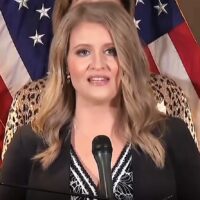
“This group of young people is so good,” American Spectator publisher said, praising the current class of approximately ten interns. “We give our young people a lot of freedom, and if they say, ‘we want to try this,’ I say, ‘alright, go for it.’”
A Wide-Reaching Legacy
Mackenzie says that the American Spectator’s Young Writers Program isn’t tied to a strict curriculum, but it does aim to provide interns with a quasi-classroom environment where they can learn the finer points of being a professional journalist from both American Spectator staff and guest speakers from outside the organization, who are invited to share their perspective on the craft of writing and reporting. During the program’s first week, interns also get advice on identifying story topics, writing headlines, and the ins and outs of Google’s search algorithm.
The program’s alumni dot the modern media landscape. Interns who excel in the program could find themselves on a viable career path. Former American Spectator interns currently work at outlets like the Wall Street Journal and Detroit News, and include big names like the popular Fox News host Greg Gutfeld.
Of recent interns, Mackenzie touts the work of Ellie Gardey Holmes, a member of the program’s class of 2020. Currently an assistant editor for The American Spectator, Gardey Holmes’s work as an intern led her to publish Newsom Unleashed: The Progressive Lust for Unbridled Power, which Mackenzie calls the “definitive” biography of California Governor Gavin Newsom.
“Flippin’ Radical”
Outside of the composition of a one-pager meant to simulate pitching their work to donors or potential editors, Mackenzie said that capstone projects like this year’s “Conservative Cultural Conquest” series are not a typical feature of the program and was initiated by the Class of 2025 themselves.
The series is notable not only for the youth of its authors, but for its proactive vision of young conservatives’ role in the culture wars. Rather than silo themselves off at conservative schools like Hillsdale College (and, one might assume, right-friendly dating and shopping apps), the first two articles by current interns Shiv Parihar and Jonah Apel encourage young conservatives to attend and engage in debate at traditionally liberal universities as a way to “restore educational institutions that foster moral character and impart true principals of liberty.” Parihar even goes as far as to say that conservatives should heed the advice of Marxist philosopher Antonio Gramsci and recognize that “the conquest of cultural power comes before political power,” a strategy also touted by anti-DEI activist Christopher Rufo. The contributions from interns Andrew Gondy and Madison Fossa focus on marriage and laziness, respectively. Gondy calls on conservatives to marry young, Fossa encourages them to display a superior work ethic; both think their suggestions can help lead Gen Z out of the unfulfilled, anxiety-ridden rut survey data indicates that they’re currently mired in.
When asked if she’s noticed a shift in the attitudes and interests of young conservatives in her time working with the program, Mackenzie says that the current generation is “flippin’ radical” in a way that their predecessors weren’t, and don’t harbor any fears about an American Spectator byline jeopardizing future job opportunities.
“Now, young conservatives are braver and more willing and idealistic and hopeful to share their ideas,” Mackenzie said. “For the longest time, they had to be silent, or their grades and opportunities would be affected. But these young people, they’re bolder and they have a different attitude.”
Mackenzie attributes this newfound boldness to Donald Trump’s audacious public persona and platforms like YouTube and TikTok providing a lower barrier to entry into media. And as far as the radicalism goes, she views it as a backlash to the Covid mandates that disrupted Gen Z’s childhoods and the trans rights debates that they were thrust into as teenagers – developments that not only forced them to pay attention to current events, but also fostered an antipathy for big government and progressive values.
“The Covid and the cultural insanity that trickled down affected them in a direct way that all of us old people weren’t having to think about, so they don’t have warm, touchy feelings about the government,” Mackenzie said. “I don’t want to make you libs feel bad but, you know, thank you. You’ve done more to help our cause than anything that we could have done.”
Michael Lovito is a reporter and critic whose work has appeared in Salon, Brooklyn Magazine, Pavement Pieces, and The District. He also serves as editor-in-chief of the politics and pop culture website The Postrider. @MLovito